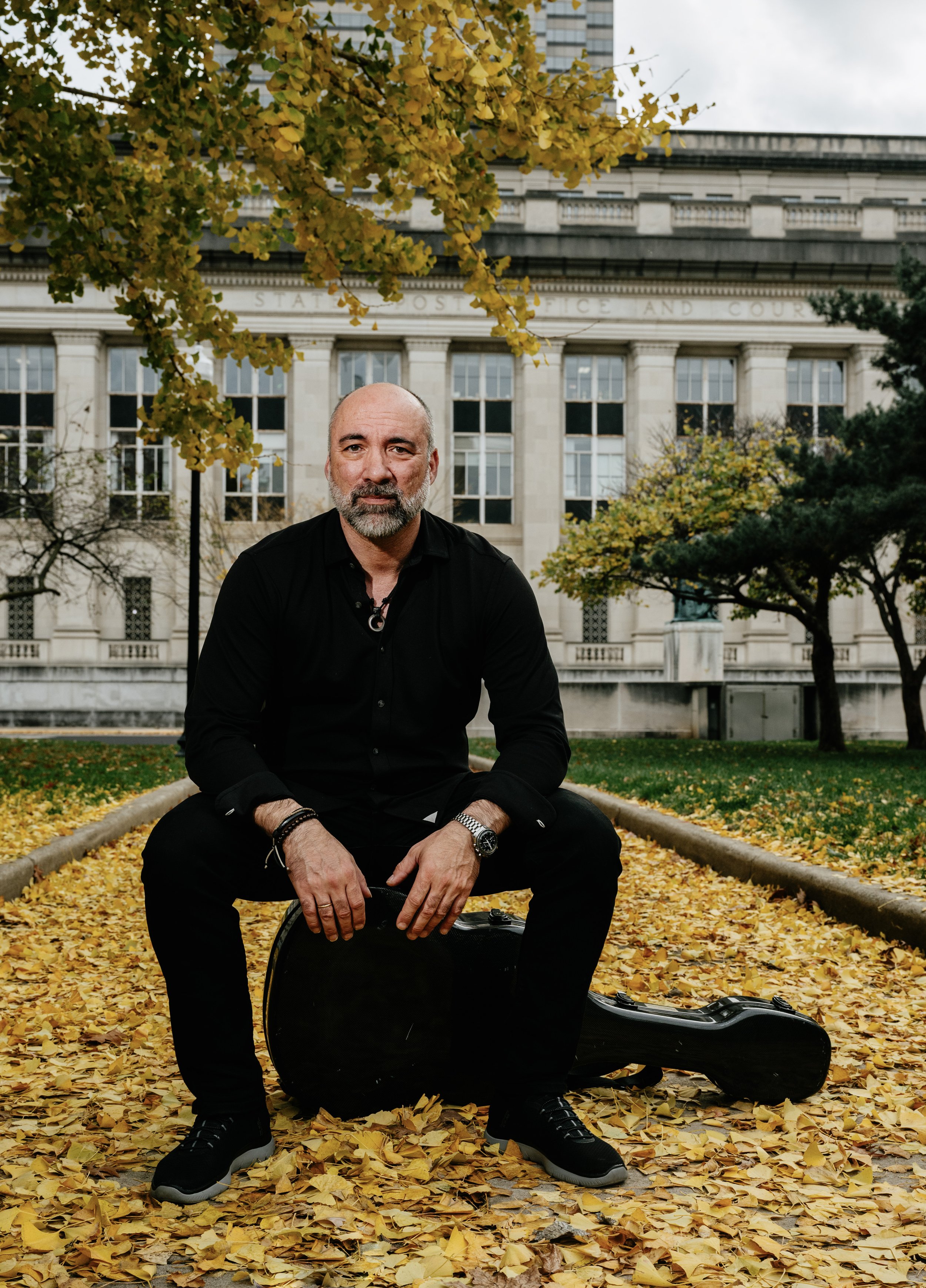
Petar Jankovic
Studying with
Petar Jankovic
A Teaching Philosophy for Developing Thoughtful, Independent Musicians
"I teach students not only how to play, but how to learn."
Classical Guitar | Indiana University Jacobs School of Music
The Philosophy
Learning Beyond the Lesson
The lesson lasts one hour. Progress is built through the other twenty-five hours of practice.
My goal as a teacher is not simply to help students play better during a lesson. It is to help them develop the knowledge, awareness, curiosity, discipline, and independence that allow them to continue learning when the lesson is over.
For that reason, much of my teaching is directed toward what students do when I am no longer beside them. Students should leave a lesson understanding what they are working toward, why it matters, how to practice it, where to direct their attention, and how to evaluate their own progress.
Over time, the questions I ask during lessons should gradually become questions students learn to ask themselves. The decisions we make together should gradually become decisions they are capable of making independently.
My goal is not to make students dependent on my answers. It is to help them develop their own musical judgment.
Inside My Studio
Listening to the Music First
I listen first for whether the music flows. Then I listen for what may be getting in the way.
When a student plays for me, my first concern is not to create a list of mistakes. I listen for whether the music flows, whether it has direction, whether the musical idea is clear, and whether the student is able to communicate it naturally.
Technique, sound, rhythm, articulation, balance, phrasing, and physical freedom all matter. But I listen to them in relationship to the music.
Technique should create musical freedom.
Sometimes I explain. Sometimes I demonstrate. Sometimes I offer a specific solution. And very often, I ask questions.
Questions do more than seek answers. They invite students to think.
I may ask what the student heard, what changed, why something worked, or what they might try differently. The purpose is not to test the student. It is to develop the habit of listening, observing, and making thoughtful decisions.
I do not teach an abstract idea of a student. I teach the student in front of me.
Learning How to Practice
Practice with Purpose
Practice is not simply something I assign. It is something I teach.
The quality of practice matters more than simply accumulating hours. I want students to learn how to work with purpose, attention, curiosity, and an increasing ability to make thoughtful decisions on their own.
Every meaningful repetition should begin with intention.
Before repeating something, a student should know what they are trying to accomplish:
- What am I trying to improve?
- Where should my attention be?
- How am I going to approach it?
- How will I know whether it worked?
Then comes the equally important part: listening to what actually happened.
Reflection makes repetition meaningful.
Practice becomes a continuous process of intention, action, listening, reflection, and adjustment. Students learn when to continue, when to simplify, when to change their approach, when to move on, and when to bring a question back to the next lesson.
Effective practice is measured not only by time spent, but by how purposefully that time is used.
Developing an Artist
From Expression to Artistic Independence
Expression begins with a question: What do you want the music to say?
Technical accuracy alone does not create a compelling performance. Music needs character, direction, contrast, imagination, and life.
Expressivity can be taught.
Dynamics, articulation, accents, phrasing, timing, sound quality, contrast, and musical direction can all be studied and shaped. If a student knows the character they want to communicate, we can learn how to give that intention sound.
At earlier stages, I demonstrate more and students naturally imitate more. As they develop, the relationship changes.
At first, I demonstrate. Later, I question. Eventually, we discuss.
Advanced students increasingly arrive with their own interpretations and artistic decisions. I ask what they want, challenge their choices when necessary, and help them shape their ideas more convincingly.
I don't need students to agree with me. I need them to know why they disagree.
Professional musicians must make decisions, articulate their ideas, and defend their artistic choices.
Artistic independence begins when a student can make a choice, explain it, and defend it.
What I Ask, What I Give
A Shared Commitment
The students who grow most are the students who learn to think before they play.
I do not expect perfection, and I do not expect every week to be equally productive. I do expect genuine engagement in the learning process and a desire to grow.
I ask students to listen carefully, preserve the guidance we develop together, ask questions when something is unclear, and approach practice analytically rather than automatically.
Hours alone do not impress me. Focus does. Discipline does. Curiosity does. The willingness to think deeply about one's own work does.
Working hard matters. Learning how to work effectively matters just as much.
As students advance, I expect them to become increasingly active participants in their education: developing opinions, making decisions, questioning ideas thoughtfully, and taking greater responsibility for their own development. Above all, I want students who are hungry to learn.
If I ask students to give me their best, they have the right to expect my best in return.
Every student has the right to my full attention, my full commitment, and the best of everything I know. I bring my knowledge, experience, energy, and judgment to the question of what will help that particular student grow.
I will ask a great deal from my students. They should expect a great deal from me.
Growth, Success, and Failure
Learning to See the Larger Journey
Growth is often most clearly visible when we look back.
Progress is not measured only by repertoire, technical ability, or successful performances. I also look for changes in how students listen, think, practice, solve problems, and make decisions. Students should learn to recognize that growth in themselves.
The same perspective matters when things go wrong.
One performance is an event. It is not a career.
A disappointing audition, competition, jury, or recital does not erase months or years of development.
A bad performance does not define you. It gives you information.
When something goes wrong, the useful question is why. Was the preparation insufficient? Did concentration change under pressure? Did a previously hidden weakness appear? Once we understand what happened, we have something we can improve.
Don't judge the failure. Study it.
Success deserves reflection too. What worked? Why did it work? What should become part of the process in the future? Learning how to respond thoughtfully to both success and failure is part of becoming a professional.
Beyond the Guitar
The Larger Education
My goal is not only to develop strong musicians. It is to develop strong people.
The guitar gives us a remarkable environment in which to learn how to set goals, work systematically, solve difficult problems, evaluate ourselves honestly, adapt when something is not working, and continue growing.
Students learn how to prepare seriously and perform under pressure. They learn how to respond to success without becoming complacent and to failure without allowing one disappointing moment to define them.
They learn how to develop an idea, articulate it, defend it, and remain open when another perspective reveals something they had not considered.
The guitar is the platform. The learning process reaches far beyond it.
These abilities can be carried into performance, teaching, leadership, entrepreneurship, collaboration, and whatever professional direction a student ultimately chooses.
When students leave my studio, I hope they carry much more with them than repertoire, technique, or a degree. I hope they understand how they learn, how they grow, how they respond when things go wrong, and how to continue developing without waiting for someone else to tell them what to do.
Guitar is where we practice the process. The process applies to everything that follows.
If my students leave as excellent musicians, I am proud of that. If they also leave as thoughtful, capable, resilient people who know how to continue growing and succeed in their professional lives, then I believe I have succeeded as their teacher.
Petar Jankovic
Indiana University Jacobs School of Music | Guitar Department